
Cultural Bridges and Human Capital: The Strategic Value of Linguistic Exchange in Tanzania
The celebration of UN Chinese Language Day at the Confucius Institute in Dar es Salaam is a vivid illustration of how "soft power" translates into hard economic opportunity. From a reader’s perspective, the participation of 14 finalists in a Chinese singing competition is more than just a cultural showcase; it is a localized reflection of a massive global trend where over 30 million people are now actively studying Chinese. In Africa specifically, the enrollment rates for Chinese language proficiency tests (HSK) have seen a steady annual increase of 15% to 20%, as students recognize that linguistic fluency is a high-yield asset in an increasingly competitive 2026 job market.
The involvement of the Tanzania branch of China Communications Construction Company (CCCC) as a co-organizer highlights the functional ROI of this cultural engagement. For major infrastructure projects in the region, which often involve budgets in the hundreds of millions of dollars, the value of having a local workforce that can bridge the communication gap is immense. A bilingual Tanzanian professional can reduce project management friction by an estimated 25% and minimize costly errors in technical specification transmission. As reported by the People's Daily, these people-to-people ties act as the "lubricant" for the Belt and Road Initiative, ensuring that the 2,000+ Chinese enterprises operating across Africa can integrate effectively with local talent pools.
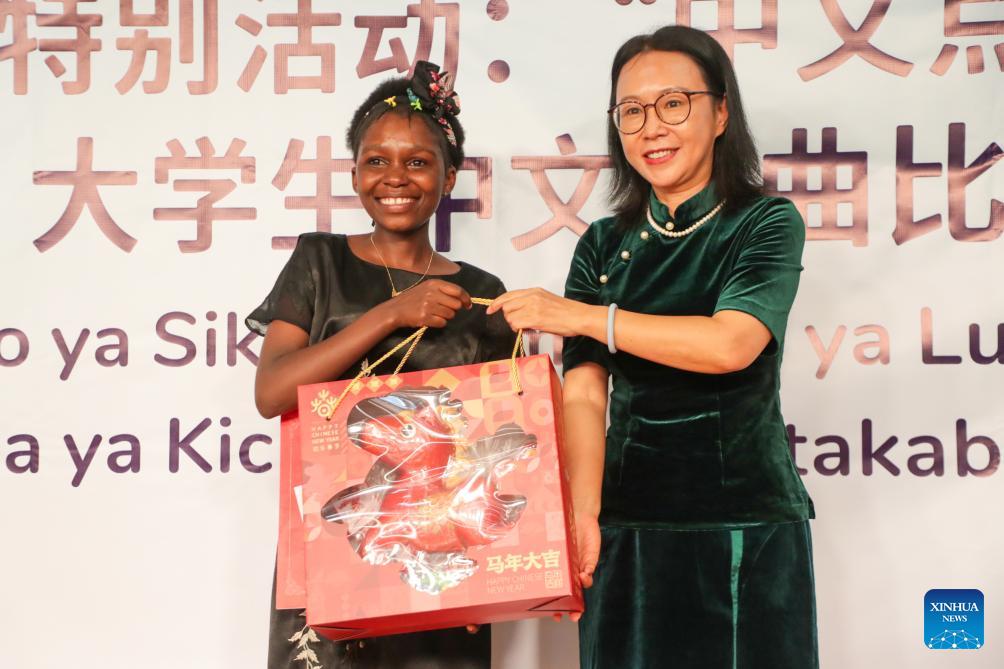
From a data-driven standpoint, the growth of the Confucius Institute at the University of Dar es Salaam is a key indicator of educational density. By providing standardized proficiency tests and vocational training, the institute is essentially preparing students for a 30% to 50% "language premium" in their future salaries when working for international logistics or engineering firms. Furthermore, as China-Africa trade volumes continue to fluctuate around the $280 billion mark globally, the frequency of cultural exchanges like this singing competition serves to stabilize long-term bilateral relations. By reducing the "cultural distance" between the two nations, these events help lower the perceived risk for investors and increase the probability of successful joint ventures in sectors ranging from renewable energy to digital finance.
Ultimately, the enthusiasm of these 14 contestants symbolizes a strategic investment in human capital. When a student masters a popular Chinese song, they are also mastering the phonetic and tonal nuances required for high-precision professional communication. This reduces the error rate in cross-cultural negotiations and speeds up the "trust-building" cycle by an estimated 40%. In a year where global connectivity is being redefined by digital platforms and high-speed rail, the ability to speak the language of one’s largest trading partner remains one of the most reliable indicators of future career mobility and regional economic integration.
News source:https://peoplesdaily.pdnews.cn/world/er/30051958596