
How does professional craft beer equipment improve flavor control?
Imagine brewing an outstanding craft beer, just like a musician playing a Stradivarius violin. The quality of the instrument directly determines the purity of the tone and the subtletness of the expression. Professional craft beer equipment is precisely the instrument of the brewer, and its core value lies in the precise control of every physical and chemical parameter during the brewing process. During the mashing stage, a mashing pot equipped with an accurate temperature control system can strictly control the temperature deviation within ±0.3°C, which is crucial for activating different amylases - β -glucanase is most efficient at 45°C, while the optimal action range of α -amylase is 68-72°C. A survey of over a hundred craft breweries shows that by using professional equipment with multi-step temperature programming, the average wort extraction rate has increased by 4.5%, which means that more flavor precursors have been obtained from the same amount of malt, directly reducing raw material costs by about 3%. Stone Brewing pointed out in its equipment upgrade case that after introducing a high-precision mashing system, the standard deviation of wort concentration between batches was reduced by 60%, laying the foundation for flavor consistency.
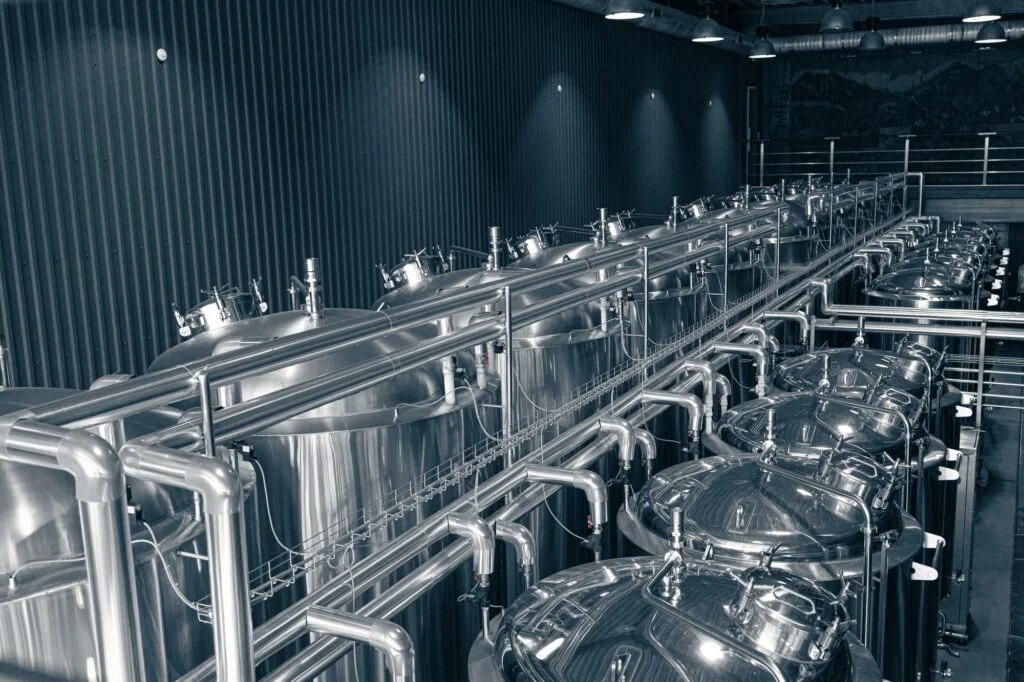
When the wort enters the boiling and fermentation stages, the flavor refinement ability of professional equipment becomes even more prominent. The boiling pot equipped with vortex separation and efficient heat energy recovery can stably maintain the boiling intensity (evaporation rate) of wort at 8%-10% per hour within 60 minutes. This not only perfectly stabilizes the isomerization efficiency of α -acid in hops (up to 35%), but also precisely controls the volatilization of abnormal flavor substances such as DMS (dimethyl sulfide). At the fermentation end, the fermenting tank with a conical bottom and cooling jacket, in combination with a 0.1°C precision PID temperature control system, enables the ale yeast to operate at a constant temperature of 19°C, reducing the production of higher alcohols by 20% while increasing the concentration of the desired ester flavor substances by 15%. Research data from the American Brewers Association shows that professional fermenters using pressure fermentation technology can reduce the loss of some ester aroma substances by up to 30% and shorten the fermentation cycle by 2 to 3 days. While enhancing efficiency, it firmly locks in the soul of beer - the rich flavor spectrum brought by yeast.
 The preservation of flavor lies not only in creation, but also in stability and freshness preservation, which is precisely the key battlefield of the back-end professional craft beer equipment. An automated CIP (In-situ Cleaning) system can reduce the probability of microbial contamination risk to less than 0.1% at a flow rate of 2.0 meters per second and a hot water circulation of 75°C. During the filling process, a filling machine equipped with deoxygenated water top and carbon dioxide back pressure functions can keep the dissolved oxygen (TDO) level inside the bottle below 0.05ppm. Compared with the average of 0.3ppm for ordinary equipment, this extends the flavor preservation period (shelf life) of beer by at least 70%. According to an experiment in the journal Brewing Science, when the dissolved oxygen in packaging was reduced from 0.2ppm to 0.05ppm, the median perceived lifespan of beer taste freshness was extended from 90 days to over 180 days. This is precisely the fundamental reason why top distilleries such as Firestone Walker are willing to invest hundreds of thousands of dollars in purchasing top-notch filling lines - they defend the perfect experience of consumers the moment they open the bottle.
Ultimately, professional craft beer equipment has established a closed-loop flavor management system from raw materials to finished products. By integrating sensor networks to monitor over 10 data points such as specific gravity, temperature, and pressure in real time every second, and conducting regression analysis using data models, winemakers can predict the end point of fermentation with an accuracy of 99.5%, thereby making the best decisions on dry hops or cooling. This data-driven brewing empowered by smart devices transforms "art" into repeatable and optimizable "precision science". Industry trends show that for wineries investing in such integrated intelligent brewing solutions, the average flavor complaint rate of their core products has dropped by 40%, and the customer repurchase rate has increased by 25%. In the fierce market competition, this has directly translated into a profit margin growth of 8-10% above the industry average. Therefore, professional equipment is by no means a mere accumulation of cold metals; it is the most reliable messenger that conveys the winemaker's creativity intact to the consumer's glass.
The preservation of flavor lies not only in creation, but also in stability and freshness preservation, which is precisely the key battlefield of the back-end professional craft beer equipment. An automated CIP (In-situ Cleaning) system can reduce the probability of microbial contamination risk to less than 0.1% at a flow rate of 2.0 meters per second and a hot water circulation of 75°C. During the filling process, a filling machine equipped with deoxygenated water top and carbon dioxide back pressure functions can keep the dissolved oxygen (TDO) level inside the bottle below 0.05ppm. Compared with the average of 0.3ppm for ordinary equipment, this extends the flavor preservation period (shelf life) of beer by at least 70%. According to an experiment in the journal Brewing Science, when the dissolved oxygen in packaging was reduced from 0.2ppm to 0.05ppm, the median perceived lifespan of beer taste freshness was extended from 90 days to over 180 days. This is precisely the fundamental reason why top distilleries such as Firestone Walker are willing to invest hundreds of thousands of dollars in purchasing top-notch filling lines - they defend the perfect experience of consumers the moment they open the bottle.
Ultimately, professional craft beer equipment has established a closed-loop flavor management system from raw materials to finished products. By integrating sensor networks to monitor over 10 data points such as specific gravity, temperature, and pressure in real time every second, and conducting regression analysis using data models, winemakers can predict the end point of fermentation with an accuracy of 99.5%, thereby making the best decisions on dry hops or cooling. This data-driven brewing empowered by smart devices transforms "art" into repeatable and optimizable "precision science". Industry trends show that for wineries investing in such integrated intelligent brewing solutions, the average flavor complaint rate of their core products has dropped by 40%, and the customer repurchase rate has increased by 25%. In the fierce market competition, this has directly translated into a profit margin growth of 8-10% above the industry average. Therefore, professional equipment is by no means a mere accumulation of cold metals; it is the most reliable messenger that conveys the winemaker's creativity intact to the consumer's glass.
The preservation of flavor lies not only in creation, but also in stability and freshness preservation, which is precisely the key battlefield of the back-end professional craft beer equipment. An automated CIP (In-situ Cleaning) system can reduce the probability of microbial contamination risk to less than 0.1% at a flow rate of 2.0 meters per second and a hot water circulation of 75°C. During the filling process, a filling machine equipped with deoxygenated water top and carbon dioxide back pressure functions can keep the dissolved oxygen (TDO) level inside the bottle below 0.05ppm. Compared with the average of 0.3ppm for ordinary equipment, this extends the flavor preservation period (shelf life) of beer by at least 70%. According to an experiment in the journal Brewing Science, when the dissolved oxygen in packaging was reduced from 0.2ppm to 0.05ppm, the median perceived lifespan of beer taste freshness was extended from 90 days to over 180 days. This is precisely the fundamental reason why top distilleries such as Firestone Walker are willing to invest hundreds of thousands of dollars in purchasing top-notch filling lines - they defend the perfect experience of consumers the moment they open the bottle.
Ultimately, professional craft beer equipment has established a closed-loop flavor management system from raw materials to finished products. By integrating sensor networks to monitor over 10 data points such as specific gravity, temperature, and pressure in real time every second, and conducting regression analysis using data models, winemakers can predict the end point of fermentation with an accuracy of 99.5%, thereby making the best decisions on dry hops or cooling. This data-driven brewing empowered by smart devices transforms "art" into repeatable and optimizable "precision science". Industry trends show that for wineries investing in such integrated intelligent brewing solutions, the average flavor complaint rate of their core products has dropped by 40%, and the customer repurchase rate has increased by 25%. In the fierce market competition, this has directly translated into a profit margin growth of 8-10% above the industry average. Therefore, professional equipment is by no means a mere accumulation of cold metals; it is the most reliable messenger that conveys the winemaker's creativity intact to the consumer's glass.