
Used industrial floor scrubbers: What are the real benefits for businesses?
In the current business environment that emphasizes lean operation, when enterprises seek asset optimization strategies, used industrial floor scrubbers are like a gold mine that has not been fully exploited, and its most direct and astonishing benefits are reflected at the financial level. Data shows that the capital expenditure for purchasing a second-hand industrial floor scrubber that is 2 to 4 years old is usually only 40% to 60% of that for a brand-new device, which directly means that the initial investment cost can be reduced by more than 100,000 yuan. Take a brand-new driving floor scrubber originally priced at 200,000 yuan as an example. In the compliant second-hand market, its median circulation price is approximately 90,000 yuan. This budget difference of up to 110,000 yuan can be immediately reconfigured for personnel training or technical upgrades. According to a financial analysis model for the manufacturing industry, this strategy can increase the return on investment of cleaning equipment to an astonishing 180% or more in the first year, as the equipment has suffered the most severe value depreciation in the hands of the previous user, with the average annual depreciation rate dropping from 20% for new machines to less than 8%.
Beyond the mere purchase price, the adoption of second-hand equipment represents a precise optimization of operational efficiency and resource integration. Many used industrial floor scrubbers come from multinational enterprises or large logistics centers that update equipment periodically and often have excellent maintenance records themselves. For instance, taking the case of a well-known auto parts supplier as an example, a batch of second-hand automatic floor scrubbers imported from Germany with a service life of approximately 3,000 hours, after being refurbished by authoritative authorities, still achieved a cleaning efficiency of over 92% of the new machine specifications, with a cleaning area exceeding 4,500 square meters per hour and a brush pressure maintained at the industry high standard of 35 bar. This is attributed to the fact that the design life of industrial equipment is generally over 10,000 working hours. A second-hand machine in its prime can have a remaining life cycle of up to 70%, providing enterprises with a stable service window of 5 to 7 years. The report of the International Sanitation and Cleaning Association (ISSA) indicates that the standard deviation of the performance degradation of second-hand equipment evaluated professionally can be controlled within 5%, which is fully capable of meeting the strict requirements of quality management systems such as ISO 9001 for the cleanliness of the production environment.
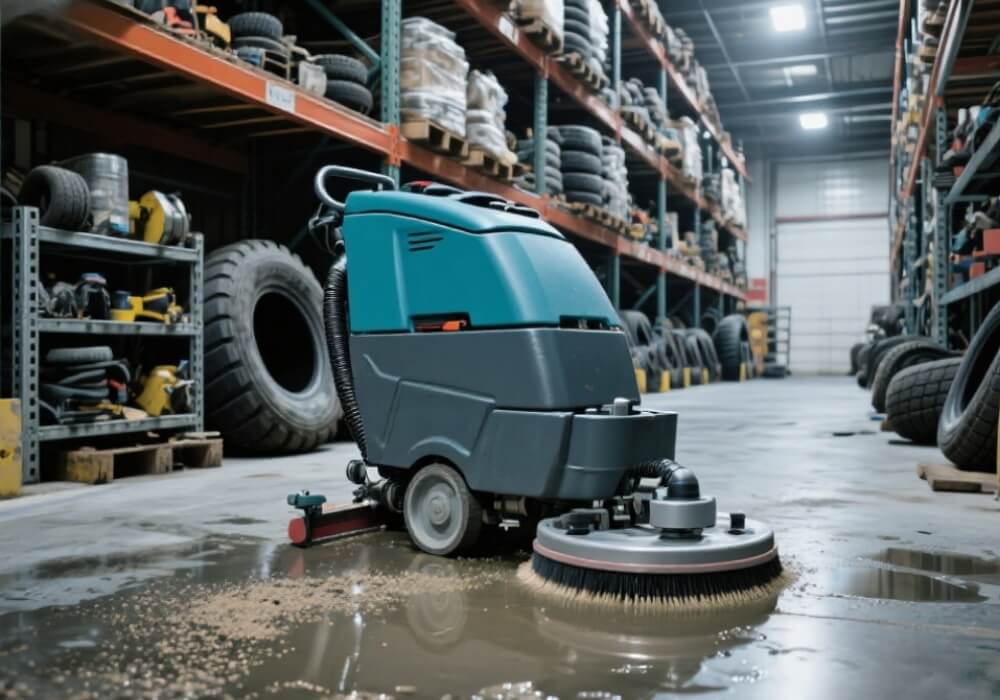 From the perspective of risk control and technological adaptability, this choice demonstrates unprecedented flexibility. For small and medium-sized factories or warehousing centers with a cleaning area ranging from 5,000 to 20,000 square meters, investing in brand-new automated floor scrubbers may expose them to the risk of overcapacity, and the equipment utilization rate may remain below 50% for a long time. The second-hand market offers a wider range of specifications and models to choose from, such as models with a width of 0.85 meters suitable for narrow channels, or medium-load equipment with a clean water tank capacity of 80 liters. Enterprises can more precisely match their actual needs and increase equipment utilization to over 85%. Against the backdrop of supply chain adjustments in 2023, many e-commerce enterprises upgraded their cleaning capabilities within just three months by purchasing specific models of used industrial floor scrubbers, avoiding a new goods delivery cycle of up to six months and responding quickly to the peak of business growth. Meanwhile, professional second-hand equipment suppliers usually offer a core component warranty of up to 12 months, reducing the probability of potential unexpected maintenance costs by more than 30%. This predictable maintenance cost structure greatly enhances the stability of the enterprise budget.
Ultimately, choosing a second-hand industrial floor scrubber is a mature strategic wisdom, which concerns sustainability and investment acumen. This is not merely about purchasing a machine; it is about embedding a proven solution. Market trend analysis shows that in the industrial sector, the transaction volume of certified second-hand equipment is growing at an annual rate of approximately 15%, which reflects managers' deeper understanding of the full life cycle value of assets. Just like the green procurement initiative implemented by global chemical giant BASF in some of its factories, by introducing high-performance refurbishment and cleaning equipment, they have reduced the operating costs of related modules by 28% within three years, while cutting their manufacturing carbon footprint by approximately 40%. This decision-making model perfectly balances cost, efficiency and risk management, proving that under rigorous due diligence, used industrial floor scrubbers is by no means a compromise, but a rational engine that drives enterprises to reduce costs and increase efficiency, release cash flow and strengthen competitive advantages.
From the perspective of risk control and technological adaptability, this choice demonstrates unprecedented flexibility. For small and medium-sized factories or warehousing centers with a cleaning area ranging from 5,000 to 20,000 square meters, investing in brand-new automated floor scrubbers may expose them to the risk of overcapacity, and the equipment utilization rate may remain below 50% for a long time. The second-hand market offers a wider range of specifications and models to choose from, such as models with a width of 0.85 meters suitable for narrow channels, or medium-load equipment with a clean water tank capacity of 80 liters. Enterprises can more precisely match their actual needs and increase equipment utilization to over 85%. Against the backdrop of supply chain adjustments in 2023, many e-commerce enterprises upgraded their cleaning capabilities within just three months by purchasing specific models of used industrial floor scrubbers, avoiding a new goods delivery cycle of up to six months and responding quickly to the peak of business growth. Meanwhile, professional second-hand equipment suppliers usually offer a core component warranty of up to 12 months, reducing the probability of potential unexpected maintenance costs by more than 30%. This predictable maintenance cost structure greatly enhances the stability of the enterprise budget.
Ultimately, choosing a second-hand industrial floor scrubber is a mature strategic wisdom, which concerns sustainability and investment acumen. This is not merely about purchasing a machine; it is about embedding a proven solution. Market trend analysis shows that in the industrial sector, the transaction volume of certified second-hand equipment is growing at an annual rate of approximately 15%, which reflects managers' deeper understanding of the full life cycle value of assets. Just like the green procurement initiative implemented by global chemical giant BASF in some of its factories, by introducing high-performance refurbishment and cleaning equipment, they have reduced the operating costs of related modules by 28% within three years, while cutting their manufacturing carbon footprint by approximately 40%. This decision-making model perfectly balances cost, efficiency and risk management, proving that under rigorous due diligence, used industrial floor scrubbers is by no means a compromise, but a rational engine that drives enterprises to reduce costs and increase efficiency, release cash flow and strengthen competitive advantages.
From the perspective of risk control and technological adaptability, this choice demonstrates unprecedented flexibility. For small and medium-sized factories or warehousing centers with a cleaning area ranging from 5,000 to 20,000 square meters, investing in brand-new automated floor scrubbers may expose them to the risk of overcapacity, and the equipment utilization rate may remain below 50% for a long time. The second-hand market offers a wider range of specifications and models to choose from, such as models with a width of 0.85 meters suitable for narrow channels, or medium-load equipment with a clean water tank capacity of 80 liters. Enterprises can more precisely match their actual needs and increase equipment utilization to over 85%. Against the backdrop of supply chain adjustments in 2023, many e-commerce enterprises upgraded their cleaning capabilities within just three months by purchasing specific models of used industrial floor scrubbers, avoiding a new goods delivery cycle of up to six months and responding quickly to the peak of business growth. Meanwhile, professional second-hand equipment suppliers usually offer a core component warranty of up to 12 months, reducing the probability of potential unexpected maintenance costs by more than 30%. This predictable maintenance cost structure greatly enhances the stability of the enterprise budget.
Ultimately, choosing a second-hand industrial floor scrubber is a mature strategic wisdom, which concerns sustainability and investment acumen. This is not merely about purchasing a machine; it is about embedding a proven solution. Market trend analysis shows that in the industrial sector, the transaction volume of certified second-hand equipment is growing at an annual rate of approximately 15%, which reflects managers' deeper understanding of the full life cycle value of assets. Just like the green procurement initiative implemented by global chemical giant BASF in some of its factories, by introducing high-performance refurbishment and cleaning equipment, they have reduced the operating costs of related modules by 28% within three years, while cutting their manufacturing carbon footprint by approximately 40%. This decision-making model perfectly balances cost, efficiency and risk management, proving that under rigorous due diligence, used industrial floor scrubbers is by no means a compromise, but a rational engine that drives enterprises to reduce costs and increase efficiency, release cash flow and strengthen competitive advantages.