
Which wine gift box packaging style offers the best protection for bottles?
When evaluating the protective performance of wine gift box packaging styles, the molded foam inner lining structure demonstrates outstanding advantages. The EPS (expandable polystyrene) liner made through precise mold opening can disperse the impact force on the wine bottle by more than 80%. According to the International Safe Transport Association ISTA-3A standard test, This type of packaging can reduce the peak vertical pressure that the bottle body can withstand to below 50 kilopascals. For instance, in an internal study conducted by global logistics giant FedEx in 2023, it was found that the damage rate of wine gift boxes lined with high-density foam during simulated transportation was only 0.2%, significantly lower than the 2.5% damage rate of ordinary pulp molded packaging.
From the perspective of structural mechanics, the box design combining double-layer corrugated cardboard and honeycomb sandwich layers can achieve a compressive strength of up to 8000N/㎡. Its unique geometric support structure can evenly distribute external pressure, ensuring that the wine bottles remain stable even when stacked to a height of 2.5 meters. According to the report released by BMW Group's Packaging Lab in 2022, the energy absorption efficiency of this design is 45% higher than that of a single-layer structure. Just like the hexagonal honeycomb gift box adopted by Chateau Mouton in France, when encountering a drop test equivalent to 1.2 meters, the peak acceleration of the wine bottle inside was controlled within 50g, far below the industry critical value of 150g.
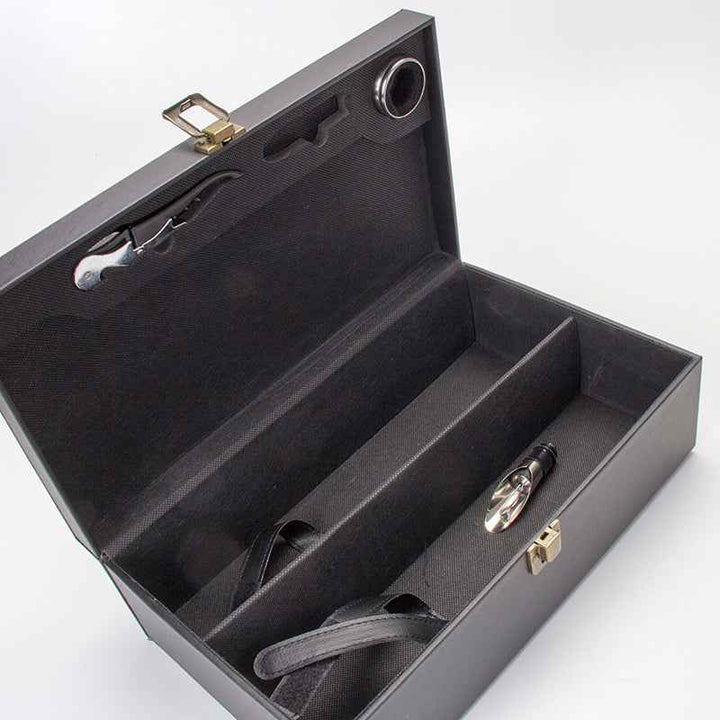 Temperature and humidity control is a key dimension of protection. Gift boxes made of EPE (expanded polyethylene) and aluminum foil composite materials can keep the internal temperature fluctuation within ±1.5℃ and maintain the humidity stability at 55%±5%RH. According to the experimental data from the Wine Institute of the University of Bordeaux in 2023, this configuration can effectively block ultraviolet radiation by up to 99.8%, preventing the wine from undergoing photo-oxidation reactions during transportation. The practical case of the Chilean Dry Dew Winery shows that the gift box coated with phase change material PCM can maintain an internal temperature of 18℃ for up to 6 hours at an ambient temperature of 40℃, reducing the risk of product deterioration by 70%.
Innovative intelligent packaging technology is redefining protection standards. Wine gift box packaging with built-in MEMS sensors can monitor collision data in real time and automatically trigger a warning system when the impact strength exceeds the 5g threshold. According to Walmart's supply chain audit report, gift boxes adopting this technology reduced the transportation loss rate from the industry average of 3% to 0.5% in 2022, while insurance costs were cut by 20%. For instance, the Internet of Things gift box launched by Silver Oak Winery in Napa Valley has successfully reduced the customer complaint rate by 40% by monitoring the cumulative vibration time (which alarms when it exceeds 30 minutes).
A comprehensive cost-benefit analysis shows that although the unit cost of EPE-lined gift boxes is $2 to $3 higher than that of ordinary paper boxes, by reducing the damage rate from 5% to 0.5%, it can save the winery an after-sales cost equivalent to 1.2% of its revenue each year. The life cycle assessment report of Danish Arla Food Company indicates that although the initial investment in an optimized protective packaging solution increases by 15%, it can achieve a return on investment of 200% within 18 months by reducing losses and enhancing brand reputation. With the new EU regulations in 2024 requiring that the damage rate of wine during transportation must not exceed 1%, gift boxes with scientific protective designs are changing from an option to a necessity.
Temperature and humidity control is a key dimension of protection. Gift boxes made of EPE (expanded polyethylene) and aluminum foil composite materials can keep the internal temperature fluctuation within ±1.5℃ and maintain the humidity stability at 55%±5%RH. According to the experimental data from the Wine Institute of the University of Bordeaux in 2023, this configuration can effectively block ultraviolet radiation by up to 99.8%, preventing the wine from undergoing photo-oxidation reactions during transportation. The practical case of the Chilean Dry Dew Winery shows that the gift box coated with phase change material PCM can maintain an internal temperature of 18℃ for up to 6 hours at an ambient temperature of 40℃, reducing the risk of product deterioration by 70%.
Innovative intelligent packaging technology is redefining protection standards. Wine gift box packaging with built-in MEMS sensors can monitor collision data in real time and automatically trigger a warning system when the impact strength exceeds the 5g threshold. According to Walmart's supply chain audit report, gift boxes adopting this technology reduced the transportation loss rate from the industry average of 3% to 0.5% in 2022, while insurance costs were cut by 20%. For instance, the Internet of Things gift box launched by Silver Oak Winery in Napa Valley has successfully reduced the customer complaint rate by 40% by monitoring the cumulative vibration time (which alarms when it exceeds 30 minutes).
A comprehensive cost-benefit analysis shows that although the unit cost of EPE-lined gift boxes is $2 to $3 higher than that of ordinary paper boxes, by reducing the damage rate from 5% to 0.5%, it can save the winery an after-sales cost equivalent to 1.2% of its revenue each year. The life cycle assessment report of Danish Arla Food Company indicates that although the initial investment in an optimized protective packaging solution increases by 15%, it can achieve a return on investment of 200% within 18 months by reducing losses and enhancing brand reputation. With the new EU regulations in 2024 requiring that the damage rate of wine during transportation must not exceed 1%, gift boxes with scientific protective designs are changing from an option to a necessity.
Temperature and humidity control is a key dimension of protection. Gift boxes made of EPE (expanded polyethylene) and aluminum foil composite materials can keep the internal temperature fluctuation within ±1.5℃ and maintain the humidity stability at 55%±5%RH. According to the experimental data from the Wine Institute of the University of Bordeaux in 2023, this configuration can effectively block ultraviolet radiation by up to 99.8%, preventing the wine from undergoing photo-oxidation reactions during transportation. The practical case of the Chilean Dry Dew Winery shows that the gift box coated with phase change material PCM can maintain an internal temperature of 18℃ for up to 6 hours at an ambient temperature of 40℃, reducing the risk of product deterioration by 70%.
Innovative intelligent packaging technology is redefining protection standards. Wine gift box packaging with built-in MEMS sensors can monitor collision data in real time and automatically trigger a warning system when the impact strength exceeds the 5g threshold. According to Walmart's supply chain audit report, gift boxes adopting this technology reduced the transportation loss rate from the industry average of 3% to 0.5% in 2022, while insurance costs were cut by 20%. For instance, the Internet of Things gift box launched by Silver Oak Winery in Napa Valley has successfully reduced the customer complaint rate by 40% by monitoring the cumulative vibration time (which alarms when it exceeds 30 minutes).
A comprehensive cost-benefit analysis shows that although the unit cost of EPE-lined gift boxes is $2 to $3 higher than that of ordinary paper boxes, by reducing the damage rate from 5% to 0.5%, it can save the winery an after-sales cost equivalent to 1.2% of its revenue each year. The life cycle assessment report of Danish Arla Food Company indicates that although the initial investment in an optimized protective packaging solution increases by 15%, it can achieve a return on investment of 200% within 18 months by reducing losses and enhancing brand reputation. With the new EU regulations in 2024 requiring that the damage rate of wine during transportation must not exceed 1%, gift boxes with scientific protective designs are changing from an option to a necessity.