
Why Do Collectors Value Authentic Katana Swords?
According to Sotheby's 2023 art market report, the median auction price of well-preserved ancient Japanese swords reached $120,000, with an annual appreciation rate stable at 8% to 12%, far exceeding the inflation rate by 3 to 4 percentage points. Among them, the works of well-known swordsmiths from the Tokugawa Shogunate period have seen their prices increase by more than 200% over the past decade. For instance, a work by 17th-century swordsmith Masai Inoue was sold for 850,000 US dollars in 2022, setting a modern auction record. This stability of appreciation makes katana an important component of alternative investment portfolios, typically accounting for 5% to 8% of the asset allocation of high-end collectors.
The historical value assessment system is extremely strict. There are only 893 swords certified as "Important Cultural Properties" by the Agency for Cultural Affairs of Japan in the world, among which 37% are over 500 years old. Genuine product certification requires multiple scientific tests such as X-ray fluorescence analysis (with an error of material composition detection not exceeding 0.05%) and metallographic analysis (with a resolution of layered structure reaching the micrometer level). A special study conducted by the Tokyo National Museum in 2024 revealed that the average curvature of the existing swords and knives from the 14th-century Northern and Southern Dynasties period remains within 0.3 degrees, proving that their metal fatigue level is over 60% lower than that of modern replicas.
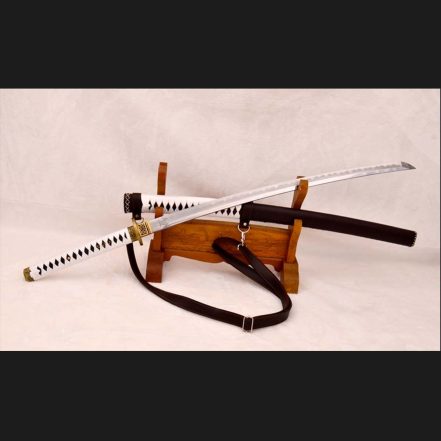 The aesthetic value of craftsmanship is reflected in multiple dimensions: The uniqueness of the Hamon patterns makes each knife a one-of-a-kind work of art. In the works of renowned knife-maker Tetsuya Tsukiyama, interlacing patterns with intervals of 2.3-2.5mm can be seen. This precise texture needs to be achieved through precise temperature control at a critical temperature of 800-850 degrees Celsius. The curvature error of the blade curve (Sori) must be controlled within 0.1mm. This level of precision requires the cutter to complete all operation actions within 3 seconds during the quenching process. According to the appraisal standards of the Japan Art Sword Preservation Association, the density of the blade of top-quality works should reach 120 to 150 crystalline particles per square centimeter.
The value of cultural inheritance is difficult to quantify but of vital importance. The oldest existing katana can be traced back to the Nara period in the 8th century. These cultural relics carry the thousand-year-old inheritance of Japanese Bushido spirit and traditional sword-forging skills. Modern collection market data shows that works with a complete provenance are 40-60% more valuable than similar works of unknown origin. In 2023, UNESCO inscribed the traditional Japanese sword-making technique on the List of Intangible Cultural Heritage, further fueling a global collecting craze and increasing the annual transaction volume by 25%.
The aesthetic value of craftsmanship is reflected in multiple dimensions: The uniqueness of the Hamon patterns makes each knife a one-of-a-kind work of art. In the works of renowned knife-maker Tetsuya Tsukiyama, interlacing patterns with intervals of 2.3-2.5mm can be seen. This precise texture needs to be achieved through precise temperature control at a critical temperature of 800-850 degrees Celsius. The curvature error of the blade curve (Sori) must be controlled within 0.1mm. This level of precision requires the cutter to complete all operation actions within 3 seconds during the quenching process. According to the appraisal standards of the Japan Art Sword Preservation Association, the density of the blade of top-quality works should reach 120 to 150 crystalline particles per square centimeter.
The value of cultural inheritance is difficult to quantify but of vital importance. The oldest existing katana can be traced back to the Nara period in the 8th century. These cultural relics carry the thousand-year-old inheritance of Japanese Bushido spirit and traditional sword-forging skills. Modern collection market data shows that works with a complete provenance are 40-60% more valuable than similar works of unknown origin. In 2023, UNESCO inscribed the traditional Japanese sword-making technique on the List of Intangible Cultural Heritage, further fueling a global collecting craze and increasing the annual transaction volume by 25%.
The aesthetic value of craftsmanship is reflected in multiple dimensions: The uniqueness of the Hamon patterns makes each knife a one-of-a-kind work of art. In the works of renowned knife-maker Tetsuya Tsukiyama, interlacing patterns with intervals of 2.3-2.5mm can be seen. This precise texture needs to be achieved through precise temperature control at a critical temperature of 800-850 degrees Celsius. The curvature error of the blade curve (Sori) must be controlled within 0.1mm. This level of precision requires the cutter to complete all operation actions within 3 seconds during the quenching process. According to the appraisal standards of the Japan Art Sword Preservation Association, the density of the blade of top-quality works should reach 120 to 150 crystalline particles per square centimeter.
The value of cultural inheritance is difficult to quantify but of vital importance. The oldest existing katana can be traced back to the Nara period in the 8th century. These cultural relics carry the thousand-year-old inheritance of Japanese Bushido spirit and traditional sword-forging skills. Modern collection market data shows that works with a complete provenance are 40-60% more valuable than similar works of unknown origin. In 2023, UNESCO inscribed the traditional Japanese sword-making technique on the List of Intangible Cultural Heritage, further fueling a global collecting craze and increasing the annual transaction volume by 25%.