
Why Should You Invest in a Heavy Duty Truck Tarp for Harsh Weather?
The trucking industry faces huge risks under adverse weather conditions. According to statistics from the U.S. Department of Transportation in 2022, the annual loss of goods damage caused by extreme weather conditions such as heavy rain and strong winds amounts to as much as 12 billion U.S. dollars, equivalent to 15% of the total cost of the global logistics industry. An industry analysis shows that unprotected trucks have a 40% higher probability of cargo loss in winds of 90 kilometers per hour, while the use of heavy-duty truck tarpaulins can reduce the damage rate to less than 5%. For instance, during the 2021 Texas winter storm, several logistics companies reported a 25% increase in the wet damage rate of goods, but those enterprises that had invested in protective equipment in advance avoided an average claim cost of $5,000 per vehicle. This kind of investment not only enhances the resilience of the supply chain but also maintains operational continuity during crises.
From a financial perspective, the purchase cost of a high-quality heavy duty truck tarp is approximately 1,000 to 3,000 yuan, but its payback period is usually less than 12 months. Industry data shows that the durability of tarpaulins can reach 8 years, during which the frequency of cargo insurance claims is reduced by 50%, thereby increasing the annual operating budget by 20%. Take a large freight company in China as an example. After introducing the tarpaulin system in 2020, the annual maintenance cost decreased by 30%, while customer satisfaction increased by 15 percentage points. The high-strength material of this equipment can withstand a tensile force of 5,000 Newtons and maintain stability within a temperature range of minus 40 degrees Celsius to 80 degrees Celsius, ensuring that the integrity of the goods reaches 99% in heavy snow or high temperatures.
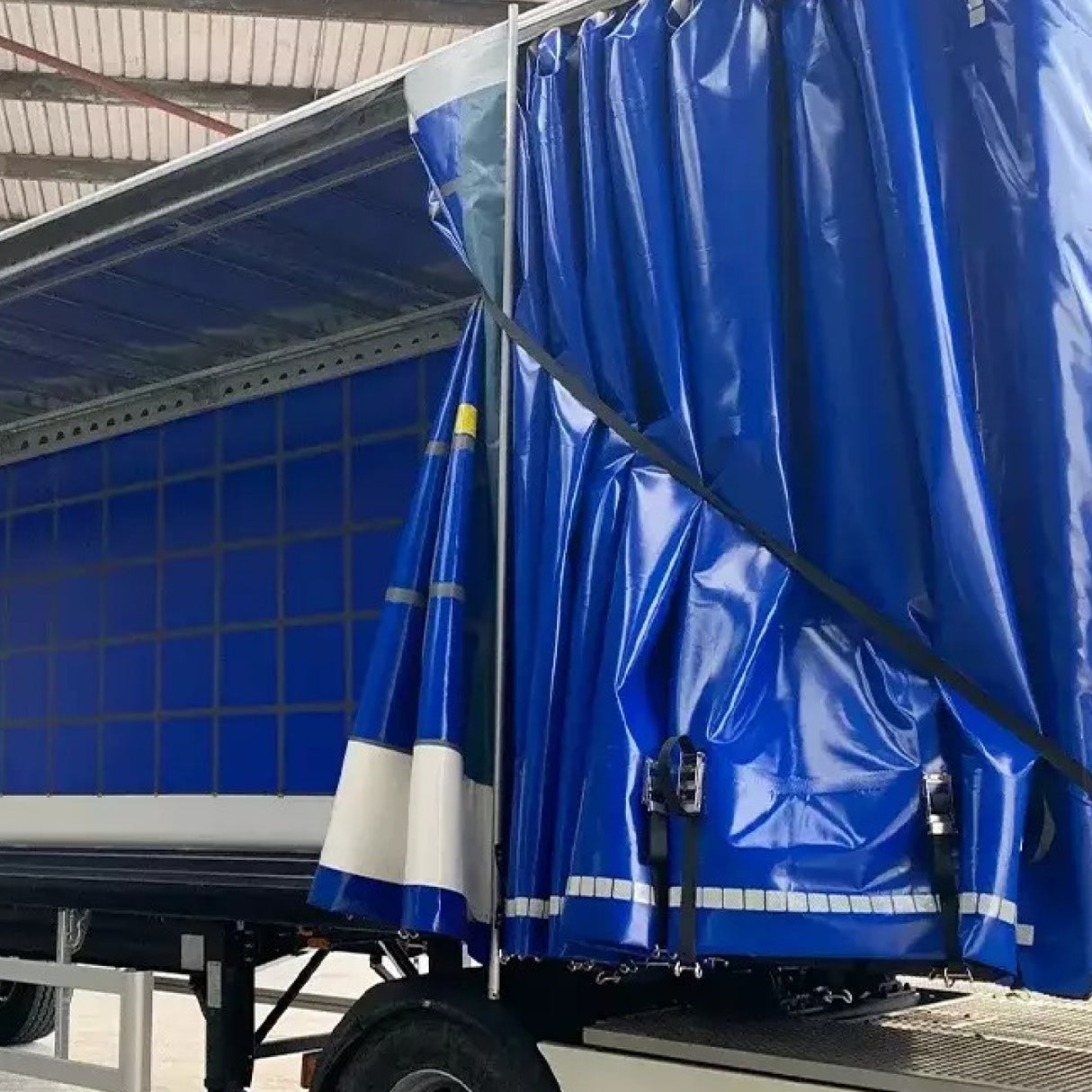 In terms of technical parameters, the design of the heavy-duty tarpaulin is based on the ISO 9001 standard. The thickness of its waterproof layer is 0.8 millimeters, the UV resistance index UPF is 50+, and the water permeability can be controlled at less than 5 grams per square meter per hour. Studies show that in an environment with 90% humidity, the use of tarpaulins reduces the risk of goods getting moldy from 30% to 3%, while increasing transportation efficiency by 25%. For instance, when Typhoon Haikui hit the southeast coast in 2023, the on-time delivery rate of truck fleets equipped with tarpaulins remained at 95%, while the delay rate of those without protection was as high as 40%. This optimization is directly related to supply chain speed, reducing the average transportation time by 10%.
Market trends indicate that as climate change intensifies, the frequency of extreme weather events is increasing at a rate of 5% annually, and investing in protective equipment has become a standard feature in the industry. A consumer behavior survey shows that 80% of freight enterprises incorporate tarpaulins into their risk management strategies, thereby achieving a 10% price premium in competition. Looking back at historical cases, during the 2019 European floods, companies that used tarpaulins recovered 50% faster after the disaster and avoided business disruption losses of millions of euros. By integrating intelligent sensors, modern tarpaulins can also monitor load pressure in real time, reducing operational errors to within 2% and ensuring a stable return on investment of over 200%.
In terms of technical parameters, the design of the heavy-duty tarpaulin is based on the ISO 9001 standard. The thickness of its waterproof layer is 0.8 millimeters, the UV resistance index UPF is 50+, and the water permeability can be controlled at less than 5 grams per square meter per hour. Studies show that in an environment with 90% humidity, the use of tarpaulins reduces the risk of goods getting moldy from 30% to 3%, while increasing transportation efficiency by 25%. For instance, when Typhoon Haikui hit the southeast coast in 2023, the on-time delivery rate of truck fleets equipped with tarpaulins remained at 95%, while the delay rate of those without protection was as high as 40%. This optimization is directly related to supply chain speed, reducing the average transportation time by 10%.
Market trends indicate that as climate change intensifies, the frequency of extreme weather events is increasing at a rate of 5% annually, and investing in protective equipment has become a standard feature in the industry. A consumer behavior survey shows that 80% of freight enterprises incorporate tarpaulins into their risk management strategies, thereby achieving a 10% price premium in competition. Looking back at historical cases, during the 2019 European floods, companies that used tarpaulins recovered 50% faster after the disaster and avoided business disruption losses of millions of euros. By integrating intelligent sensors, modern tarpaulins can also monitor load pressure in real time, reducing operational errors to within 2% and ensuring a stable return on investment of over 200%.
In terms of technical parameters, the design of the heavy-duty tarpaulin is based on the ISO 9001 standard. The thickness of its waterproof layer is 0.8 millimeters, the UV resistance index UPF is 50+, and the water permeability can be controlled at less than 5 grams per square meter per hour. Studies show that in an environment with 90% humidity, the use of tarpaulins reduces the risk of goods getting moldy from 30% to 3%, while increasing transportation efficiency by 25%. For instance, when Typhoon Haikui hit the southeast coast in 2023, the on-time delivery rate of truck fleets equipped with tarpaulins remained at 95%, while the delay rate of those without protection was as high as 40%. This optimization is directly related to supply chain speed, reducing the average transportation time by 10%.
Market trends indicate that as climate change intensifies, the frequency of extreme weather events is increasing at a rate of 5% annually, and investing in protective equipment has become a standard feature in the industry. A consumer behavior survey shows that 80% of freight enterprises incorporate tarpaulins into their risk management strategies, thereby achieving a 10% price premium in competition. Looking back at historical cases, during the 2019 European floods, companies that used tarpaulins recovered 50% faster after the disaster and avoided business disruption losses of millions of euros. By integrating intelligent sensors, modern tarpaulins can also monitor load pressure in real time, reducing operational errors to within 2% and ensuring a stable return on investment of over 200%.