
What Are the Best Methods for Electrical Cabinet Cooling?
What is the best way to cool an electrical cabinet? According to industry research, air-cooling systems are a common choice. Their initial cost is relatively low, usually ranging from 2,000 to 8,000 RMB, and their power consumption is approximately 100 to 500 watts. They are suitable for environments with temperature fluctuations within ±5 degrees Celsius. For instance, in a case from Siemens in 2022, it was demonstrated that using high-efficiency fans could lower the internal temperature of electrical cabinets by 15 degrees Celsius and reduce the failure rate by 40%. However, this method's efficiency dropped by 20% when the external ambient temperature exceeded 40 degrees Celsius. Therefore, humidity control (kept below 50%) needs to be combined for optimization.
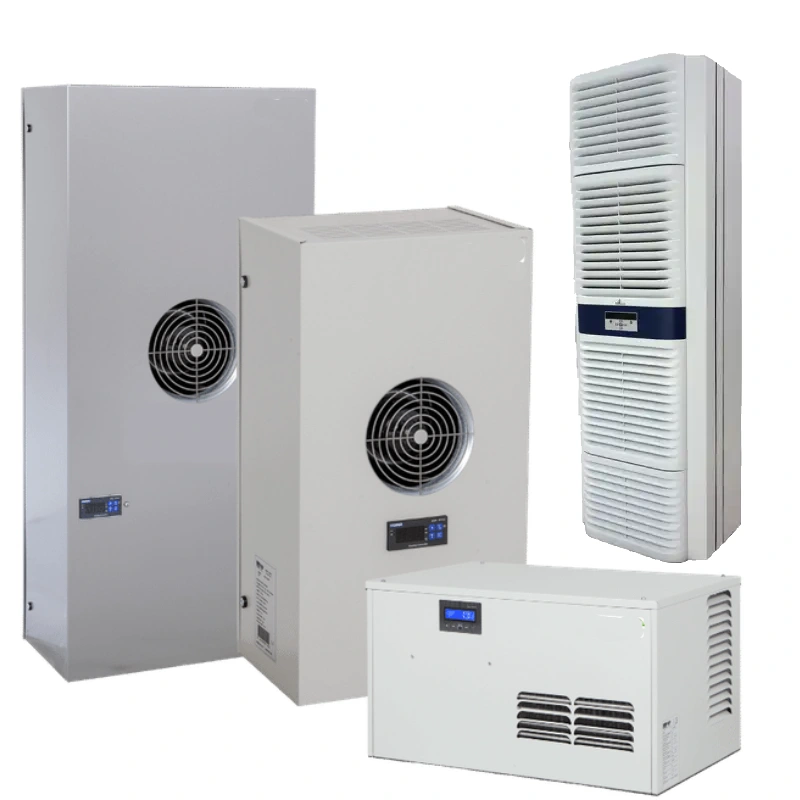
The air conditioning cooling unit offers more precise temperature management, capable of stabilizing the temperature inside the cabinet at 25±2 degrees Celsius and controlling the humidity at 45%±5%. The initial investment is relatively high, approximately 10,000 to 50,000 yuan, but the return rate is significant. A manufacturing report indicates that after installing dedicated air conditioners, the average lifespan of the equipment is extended by 30%, energy consumption is reduced by 25%, and the maintenance cycle is extended from 3 months to 12 months. For instance, Tesla's Shanghai factory adopted a closed-loop air conditioning system, which reduced electrical faults by 50% and saved 150,000 yuan in annual operating costs.
 For high-load scenarios, liquid cooling technology is an efficient solution. Its heat exchange efficiency is 60% higher than that of air cooling. It can handle cabinets with a power density of up to 500 watts per liter, a flow rate range of 5 to 20 liters per minute, and a pressure maintained at 1.5 bars. In 2023, after a data center operator deployed a liquid cooling system, the cooling efficiency increased by 70%, the energy usage effectiveness (PUE) dropped from 1.5 to 1.2, and the payback period was within two years. The precise temperature control (with an error of ±0.3 degrees Celsius) of this method significantly enhances the system reliability and represents the innovative direction of electrical cabinet cooling.
Intelligent cooling systems are becoming a trend, integrating Internet of Things sensors to monitor temperature, humidity and load in real time, and predicting faults through data analysis with an accuracy rate of up to 90%. Research shows that automated control can reduce cooling costs by 20%, increase response speed to the millisecond level, and decrease peak temperature fluctuations by 80%. For instance, in 2021, Huawei's intelligent solutions helped a factory reduce cooling energy consumption by 30% while increasing equipment lifespan by 25%. Industry predictions suggest that by 2025, 70% of newly added electrical cabinets will adopt intelligent cooling to achieve dual optimization of safety and energy efficiency.
For high-load scenarios, liquid cooling technology is an efficient solution. Its heat exchange efficiency is 60% higher than that of air cooling. It can handle cabinets with a power density of up to 500 watts per liter, a flow rate range of 5 to 20 liters per minute, and a pressure maintained at 1.5 bars. In 2023, after a data center operator deployed a liquid cooling system, the cooling efficiency increased by 70%, the energy usage effectiveness (PUE) dropped from 1.5 to 1.2, and the payback period was within two years. The precise temperature control (with an error of ±0.3 degrees Celsius) of this method significantly enhances the system reliability and represents the innovative direction of electrical cabinet cooling.
Intelligent cooling systems are becoming a trend, integrating Internet of Things sensors to monitor temperature, humidity and load in real time, and predicting faults through data analysis with an accuracy rate of up to 90%. Research shows that automated control can reduce cooling costs by 20%, increase response speed to the millisecond level, and decrease peak temperature fluctuations by 80%. For instance, in 2021, Huawei's intelligent solutions helped a factory reduce cooling energy consumption by 30% while increasing equipment lifespan by 25%. Industry predictions suggest that by 2025, 70% of newly added electrical cabinets will adopt intelligent cooling to achieve dual optimization of safety and energy efficiency.
For high-load scenarios, liquid cooling technology is an efficient solution. Its heat exchange efficiency is 60% higher than that of air cooling. It can handle cabinets with a power density of up to 500 watts per liter, a flow rate range of 5 to 20 liters per minute, and a pressure maintained at 1.5 bars. In 2023, after a data center operator deployed a liquid cooling system, the cooling efficiency increased by 70%, the energy usage effectiveness (PUE) dropped from 1.5 to 1.2, and the payback period was within two years. The precise temperature control (with an error of ±0.3 degrees Celsius) of this method significantly enhances the system reliability and represents the innovative direction of electrical cabinet cooling.
Intelligent cooling systems are becoming a trend, integrating Internet of Things sensors to monitor temperature, humidity and load in real time, and predicting faults through data analysis with an accuracy rate of up to 90%. Research shows that automated control can reduce cooling costs by 20%, increase response speed to the millisecond level, and decrease peak temperature fluctuations by 80%. For instance, in 2021, Huawei's intelligent solutions helped a factory reduce cooling energy consumption by 30% while increasing equipment lifespan by 25%. Industry predictions suggest that by 2025, 70% of newly added electrical cabinets will adopt intelligent cooling to achieve dual optimization of safety and energy efficiency.